
The Short Answer
Grinding usually means worn rollers or a bent track. Squealing points to dry hinges or rollers that need lubrication. Popping almost always means a spring or cable problem, which is the noise to take most seriously. Rattling is typically loose hardware or a track that's drifted out of alignment. Here's how a technician works through each one.
Grinding: Metal-on-Metal Resistance
Grinding sounds like two hard surfaces fighting each other, and it often gets worse at the same spot in the door's travel every time. In Lehigh Acres' heat, nylon rollers dry out and crack faster than they would in a cooler climate, so this is usually the first thing checked.
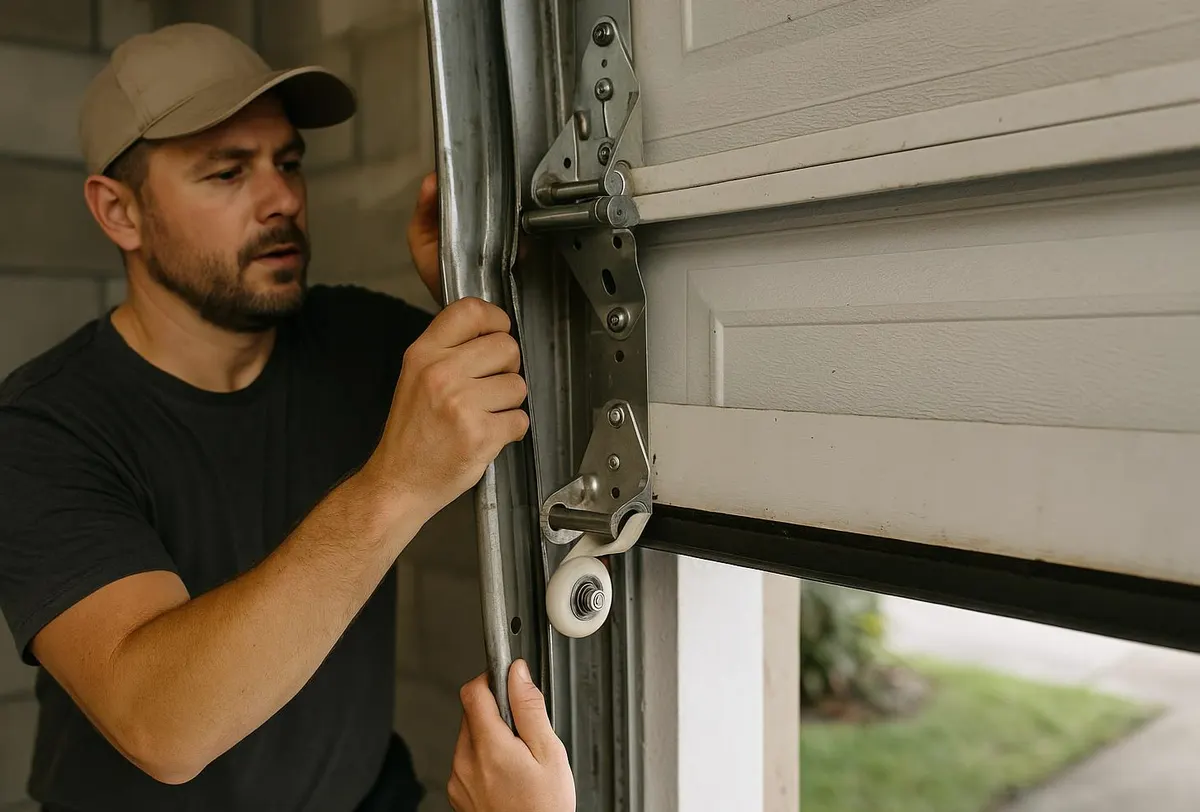
- Worn or damaged rollers: Heat and repeated humidity swings make nylon rollers brittle. The fix is swapping them for new nylon or sealed-bearing steel rollers, which hold up better long-term.
- Bent or misaligned track: A door bumped by a car, a ladder, or storm debris can knock the track out of true. The fix is realigning the brackets or, if the metal is kinked, replacing the damaged section.
- Worn opener gear (chain-drive units): Internal plastic gears strip over years of use. The fix is a gear-and-sprocket kit replacement, or a new opener if the motor is also aging out.
Squealing: The Dry-Friction Sound
Squealing is a high-pitched sound, usually loudest when the door first starts moving or passes through the hinge points. It's almost always a lubrication issue before it's anything mechanical.
- Lack of lubrication: Afternoon humidity and salt-laden air inland from the Gulf both strip factory lubricant off moving parts faster than drier climates. The fix is cleaning old grease and grit off the hinges, rollers, and track, then applying a silicone-based garage door lubricant (not WD-40, which attracts dust).
- Worn hinges: If lubrication doesn't quiet things down, the hinge pins themselves may be elongated from years of flexing. The fix is replacing the hinge set.
- Opener motor bearing: A squeal coming from the unit on the ceiling rather than the door itself points to a wearing motor bearing. The fix is bearing replacement or, if the opener is older, a full unit swap.
Popping: The One to Take Seriously
A pop or bang is different from the others because it's often tied to parts under extreme tension. A technician checks springs first, every time, because a failing torsion spring is both the most common cause and the most dangerous to ignore.
- Torsion spring losing tension or nearing failure: Springs are rated for a set number of open-close cycles, and frequent use during storm season (testing the door before a hurricane, running the opener repeatedly during outages) shortens that lifespan. A pop can mean the spring is about to snap. This is not a DIY fix; it requires proper tools and tensioning knowledge, and it's one of the most common service calls technicians handle.
- Cable slipping or fraying on the drum: If the spring checks out, the cable is next. Salt air and moisture promote rust on cable strands, which weakens them and causes a popping or snapping sound as they slip. The fix is cable replacement, usually paired with roller inspection since both wear on a similar timeline.
- Loose track hardware: Less dangerous but still worth checking, a loose bracket bolt can produce a pop as the door shifts against it. The fix is simply re-tightening with the correct torque.
Rattling: Loose, Not Broken (Usually)
Rattling is a continuous loose, metallic sound through the full travel of the door, rather than a sharp noise at one point.
- Loose hardware: Vibration from daily use, combined with humidity swings that cause wood-paneled doors to swell and shrink, works screws and bolts loose over time. The fix is going panel by panel with a wrench, tightening everything, and replacing any stripped holes.
- Track misalignment: If tightening hardware doesn't help, check the gap between the rollers and the track. Too much play lets the door wobble as it travels. The fix is adjusting the track brackets back to spec.
- Worn chain or belt tension (openers): A chain-drive opener with a slack chain will rattle against the rail. The fix is adjusting tension or replacing a stretched chain or belt.
When to Call Precision Garage Door of Lehigh Acres
If you're hearing a pop or bang, stop using the door and call right away; that's a spring or cable issue and it's not safe to keep cycling. Grinding, squealing, or rattling that doesn't go away after basic lubrication is worth a diagnostic visit too, especially heading into the wetter months when rust and swelling only get worse with time. Our technicians check springs, cables, rollers, and track alignment in that order, diagnose what's actually causing the noise, and handle it the same visit when possible, whether that's Garage Door Spring Repair, Cable & Roller Replacement, or a full Garage Door Maintenance & Tune-Up to get ahead of the next noise before it starts.
If your garage door is making a sound that wasn't there last month, call Precision Garage Door of Lehigh Acres and we'll get a technician out to track it down.